|
If you have followed this website for any length of time you know that one of our passions is Textual Criticism, and how it builds trust in God's Word. Many of us know Daniel Wallace for his work in Greek grammar studies. What we may not know is his passionate and profound work in Textual Criticism, which you can find here.
In the following two part lecture, given at Biola University in 2011, he presents the question ''Is What We Have Now What They Wrote Then?". Are our Bibles today what the original writers wrote then, or have the become corrupted through years of copying and omissions?
0 Comments
The topic of the Canon and Textual Criticism are two fascinating and important topics of biblical study. They are, however, far too often neglected, and in many cases unheard of by many common church goers.
Many of us blindly believe that the bible is the Word of God, but on what basis? How do we know that the 66 books in our bibles belong there? How do we know these are the ones God wanted us to have? The study of the Canon shows us how exactly these books which are in our bibles came to belong there. For a detailed study on the Canon I highly recommend reading the masterpiece from F.F. Bruce: The Canon of Scripture. Below Dr. Bill Mounce gives a passionate and convincing lecture on these two great fields. Enjoy! If you are a Christian then you believe that all Scripture is inspired by God. You believe that He is behind every word, directing every word, and that He has preserved His word for us today. But have you ever thought about how God inspired the Bible? Have you thought about how the Holy Spirit guided the men to write down the precise words which God wanted them to write?
Should we just blindly accept the Scriptures? For some, the response to these questions would be, “I just believe the Bible and take God at His word” or something to that effect. Some people just accept everything, no questions asked. Some would say that my questions in the previous paragraph are overly critical and could breed skepticism. But is that true? Should we just simply accept things of such importance and magnitude without knowing why or how? I do not believe so. We believe and accept the gospel by faith, but as Christians we should seek to understand as much of it as possible, and know why we believe what we claim to believe. The same is true of the Scriptures. We don’t just tell people, “believe in the gospel”, we have to first explain to them what the gospel is and why they must believe in it. The same is also true of the Scriptures. It is not right to say, “The Bible is God’s word, period. Just believe it and don’t ask any questions”. 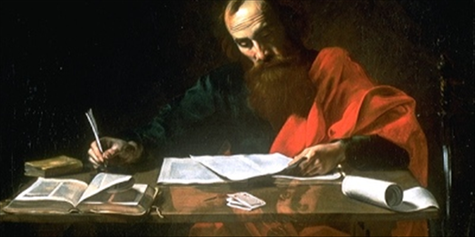 Who is your favorite New Testament writer? Some of us may have clear preferences, while others may be hard pressed to choose. Some, such as myself, like the simplicity and practicality of John. Others like the beautiful literary style of Luke. While others like the style of Paul.
Who is your favorite writer? Who are you most edified by reading? If you have one, what is your favorite NT book in Greek? Please share opinions, thoughts, reasons, etc, and let's make a discussion out of it. |